


Leisure boats · sail & motor
Full control of your water, fuel and waste tanks
Sensors sit on the outside of the tanks you already have and read the level and volume through the wall — in the Gobius app, on the plotter, or on a gauge, with an alarm where you want it. Nothing goes inside the tank.
- Nothing inside the tanks
- About 15 minutes a tank
- Phone, plotter or a gauge

Peace of mind
Stop guessing while you are out on the water
Every tank on board, read from outside the tank wall.
Every tank in one place
Water, diesel, holding and grey, side by side in the Gobius app over Bluetooth. No hub, no cloud account, no signal needed.
Nothing goes inside the waste tank
You do not drill it, and you do not lower a sender into effluent that will foul and get messy. Of everything Gobius does, owners thank us for this one most.
Read it where you already look
The app on your phone, and with Gobius C an NMEA 2000 plotter at the helm or the analog gauges already in the panel.
An alarm, not a discovery
Set the level yourself, tank by tank, and be told when it is reached.
The waste tank
The tank nobody wants to guess about
Black water is the tank that ruins a weekend. Overfill it once and you get the smell through the whole boat and a pump-out you cannot reach until Monday. It is also the tank with the worst gauge on board — a float that coats over and sticks within a season.
Gobius reads it through the wall from outside: radar down through the top of a plastic or fibreglass tank, or a Pro sensor on the side of any tank at all. Nothing sits in the contents, and an alarm set early leaves time to find a pump-out.
Fitting it
Measured through the tank wall, not through a new hole
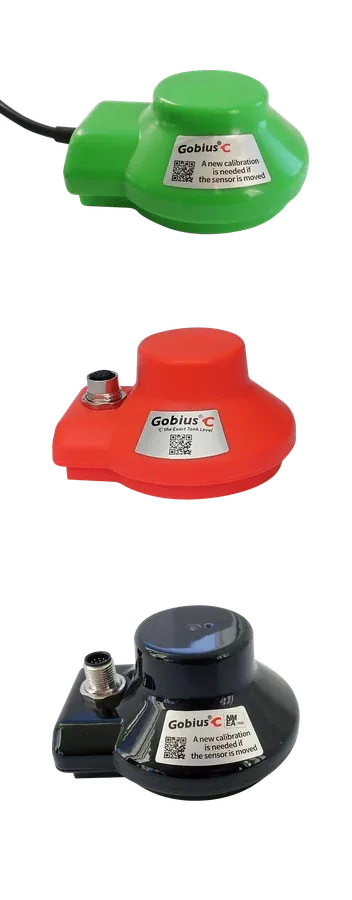
A traditional sender wants a hole in the tank top, a gasket and a fitting. Gobius measures from outside instead — Gobius C down through the top of a plastic or fibreglass tank, Gobius Pro glued to the wall of any tank, metal included.
- 01
Clean the spot
Wipe the outside of the tank where the sensor sits.
- 02
Stick it on
Gobius C on top, Gobius Pro on the wall. Nothing goes into the tank.
- 03
Calibrate in the app
The app walks you through it — about 15 minutes a tank.
Built for a boat that moves: Gobius C reads the surface many times a second and filters the slosh out, so the number holds steady while the liquid does not. Measuring from outside →
Two sensors
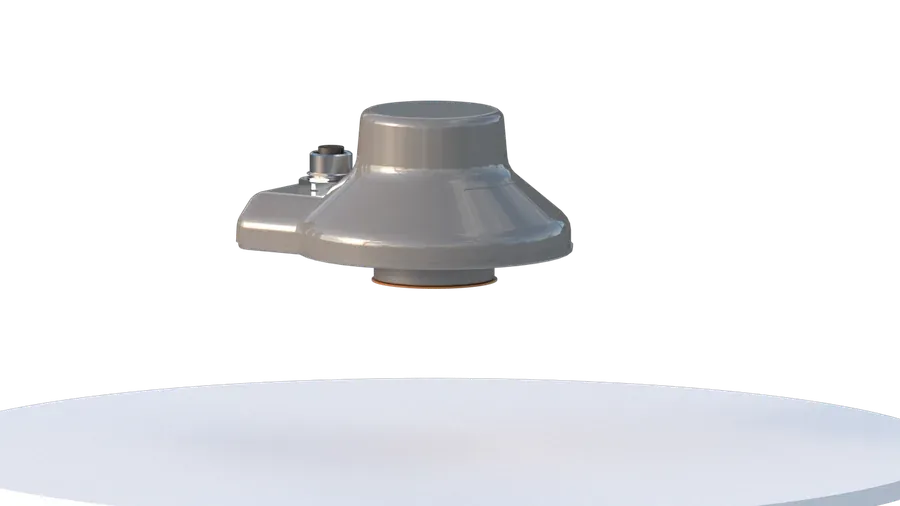
Gobius C from the top, Gobius Pro from the side
Gobius C — the exact level
Micro radar on top reads the liquid surface to within 2 mm and gives a stepless 0–100% reading of tank depth from 200 to 4500 mm. Fully external on plastic and fiberglass.
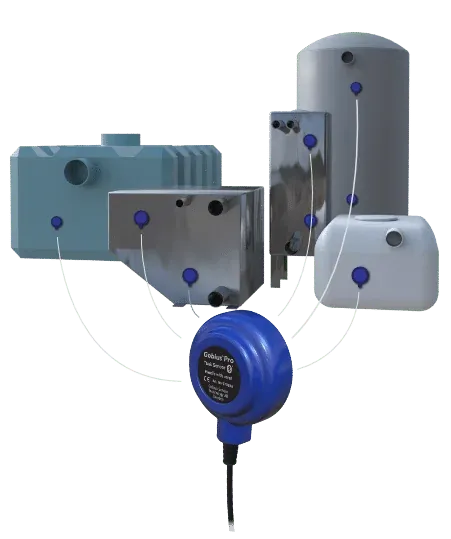
Gobius Pro — the alarm point
Sensors glue to the outside of the wall and read from the side, through any material including metal, with nothing drilled. Each watches one fixed level and gives an alarm there — never a percentage — and can switch a lamp, buzzer or pump.
Builders & yards
The same job at the build as in the marina
Fitted on the line or retrofitted ten years later, the job is the same: clean the spot, mount the sensor, calibrate. Nothing is cut into the hull or the tank, so there is no extra penetration to seal or sign off.
The sensors handle the tank shapes a yard actually uses — tapered, slanted, moulded into the hull, metal in the engine bay — so one part number covers boat after boat, and with Gobius C the levels go out on NMEA 2000 or to the panel gauges. Fitting Gobius at the build →

Designed, built and tested on the Swedish west coast
Owners
What boat owners tell us
“The float gauge on the water tank had been lying to me for three seasons. Now I get a real percentage.”
“Holding tank under the aft bunk, and nothing I wanted to open. One Pro sensor on the side, set to warn me early.”
“Both diesel tanks done in an afternoon at the pontoon. I plan a passage on the number now, not on a guess.”
Questions
What boat owners ask first
Do I have to open the waste tank?
No. On polythelene or fibre glass, Gobius C reads down through the tank top from outside; Gobius Pro reads through the wall from the side on any material. Nothing goes into the contents.
What about my aluminium or stainless fuel tank?
Radar cannot see through metal, so there Gobius C needs a small port in the tank top — an existing opening will often do. To leave the tank untouched, you can fit Gobius Pro on the wall outside instead.
Can I see the volume at the helm?
Yes, Gobius C does. It goes onto the boat's network (NMEA 2000) and shows on a chartplotter or Victron display BLE and wires), or drives the analog gauges already in the panel. Read more here.
Leave the guessing at the dock
Order direct from Sweden, or from a marine dealer near you. Not sure which sensor suits your tanks? Ask us.