


For manufacturers · OEM & series build
The tank sensor that stops coming back
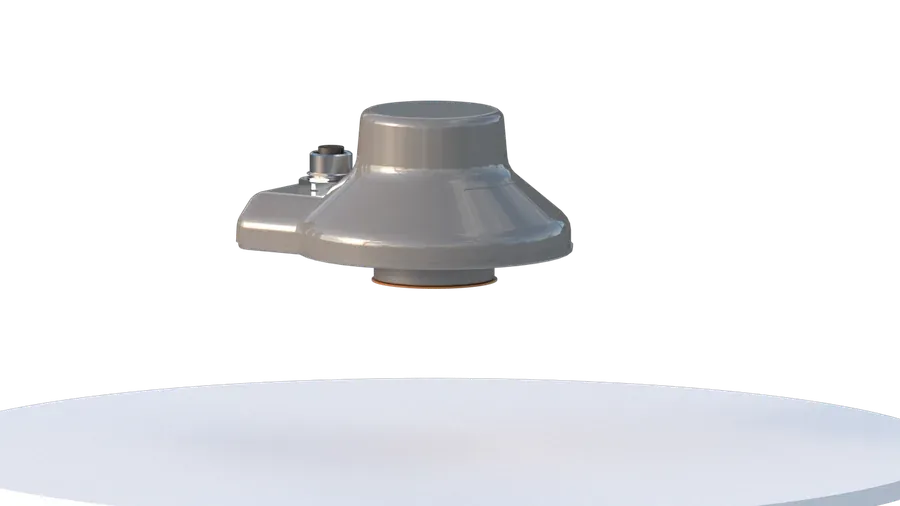
Every in-tank sender you fit is a warranty claim waiting a few years to happen. Gobius mounts outside the tank: nothing in the medium to foul or corrode, and on polyethylene and fiberglass, nothing cuts into the tank at all.
The real cost
The failure you never get to see
A float or probe inside a tank is the one part of the build nobody want or can inspect after handover. It fouls in grey water, corrodes in black, and eventually sticks.
The owner does not blame the tank. They call the yard — years after the unit left you, usually outside warranty, always at your cost to attend.
Nothing of ours goes inside. That whole class of comeback is not there to have.
On plastic, polyethylene and fibreglass, nothing is cut into the tank either. One less seal in the build, one less line on the inspection list, one less thing that can weep in year three.
Across the range
One part number, whatever shape the tank is
Tanks get moulded to the space they occupy: tapered, saddle-shaped, stepped around a stringer. Gobius reads them as they are — no redesigning the tank around a sender.
The architect keeps the volume
No sender boss, no float swing, no straight vertical run to design around. The tank stays the shape it needs to be.
One sensor, many models
One unit covers tank depths from 200 mm to 4.5 metres, so a single article number runs across a hull or chassis range. Procurement and the spares list stay short.
It fits the line, not the reverse
About fifteen minutes per sensor, no jig and no rework, done by the fitter you already have. Retrofit or factory fit is the same job.
Metal tanks are a planned operation. Radar will not read through steel or aluminium, so Gobius C needs a small port in the tank top — a scheduled step on the line, not a surprise, and far easier at build than as a retrofit. Where the top must stay closed, Gobius Pro glues to the outside of a side wall, reads through any material including metal with nothing drilled, and gives one fixed alarm point per sensor rather than a percentage.
At handover
A sensor that finally tells the truth
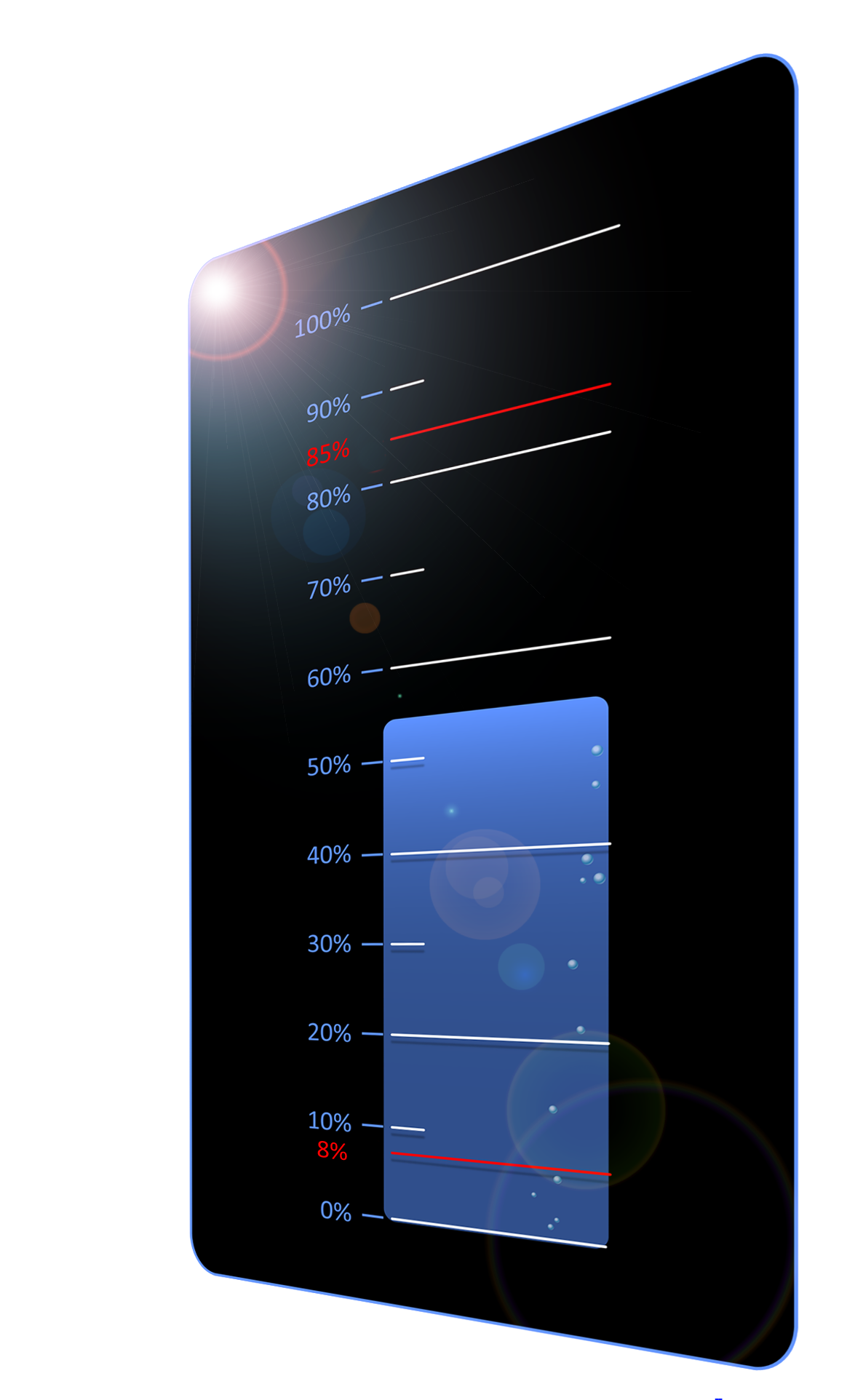
Every gauge on a boat has lied to its owner at some point. Gobius C reads stepless 0 to 100 %, live on the owner’s phone in the free Gobius app from day one. No hub to house, no account to explain.
If you want to go further, point them to the Gobius Tank Calculator — a separate app that profiles their own tank so the level reads in true liters for that tank shape. It requires a Gobius C and does not work with Gobius Pro. A good line in the handover pack.
Working with us
Volume pricing, and an engineer on the other end
Gobius is a small Swedish company; a build enquiry reaches somebody who has fitted these sensors. Send the models, the tanks in each and the units per year, and you get volume terms against that — plus samples, if you want to prove the step on your own line first.
You will also hear plainly if a tank falls outside what these sensors do well — a much cheaper conversation at drawing stage than on a finished unit.
Designed in Sweden. Full numbers on Gobius C; the C or Pro comparison covers which belongs on which tank.
Specifying tanks for a new model?
Send the tank list and the build volume. You will get volume pricing, samples for the first unit, and an engineer to talk it through.